What Kind of Dental Specialist in Flowood, MS, Do You Need
One of the most common things patients say when they arrive at Tharp, Klaus & Kelly after years of managing tooth loss, worn dentition, or failing dental work with no clear path forward is that they didn’t know exactly what to search for. Many of them weren’t searching for a prosthodontist by name. They were searching for someone who could actually solve a problem other providers hadn’t been able to fix.
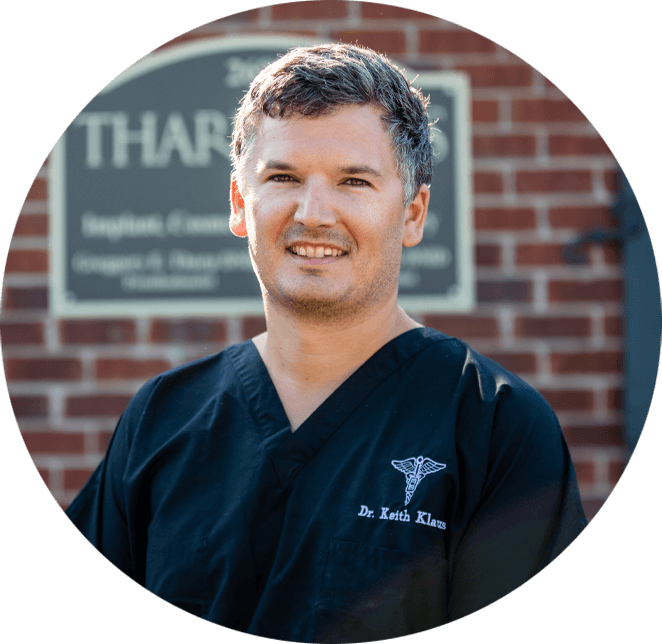
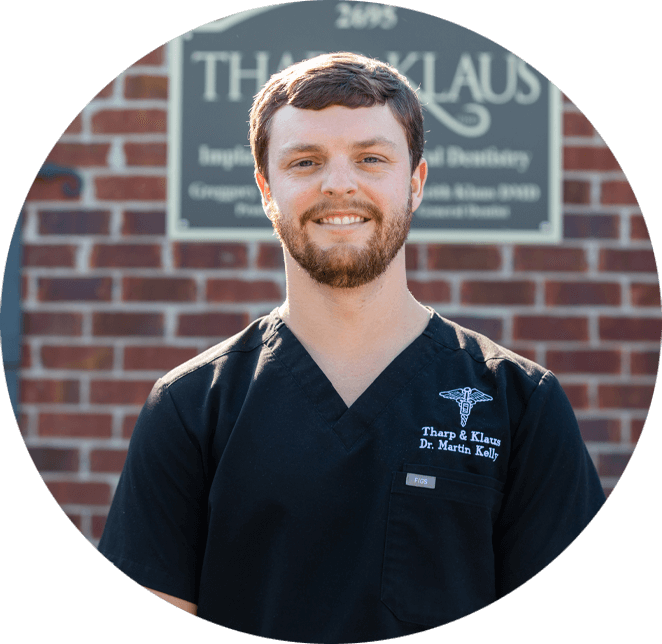
In short, prosthodontics is the dental specialty focused on restoring and replacing teeth. At our Flowood dental practice, Dr. Tharp, Dr. Klaus, and Dr. Kelly bring prosthodontic training to every complex restorative case, serving patients from Flowood, Pearl, Ridgeland, and the broader Jackson area. If your situation involves significant tooth loss, full mouth reconstruction, implants, or worn and failing restorations, call (601) 939-4100 to talk through your options.
Prosthodontics: The Specialty Behind the Smile
The American Dental Association recognizes prosthodontics as one of twelve dental specialties. A prosthodontist completes dental school, then goes on to an additional three years of graduate-level training focused specifically on restoring damaged, missing, or compromised teeth. That training covers dental implants, fixed and removable dentures, full mouth reconstruction, occlusion (how teeth fit together), and the relationship between dental work and the jaw joint.
The practical significance of this for patients: prosthodontists are trained to see the full picture of a patient’s bite, bone structure, and functional needs when designing a treatment plan. A dental crown placed without attention to occlusion, or implants placed without accounting for how the arches work together, can create problems that outlast the restoration itself. Prosthodontic training addresses this specifically.
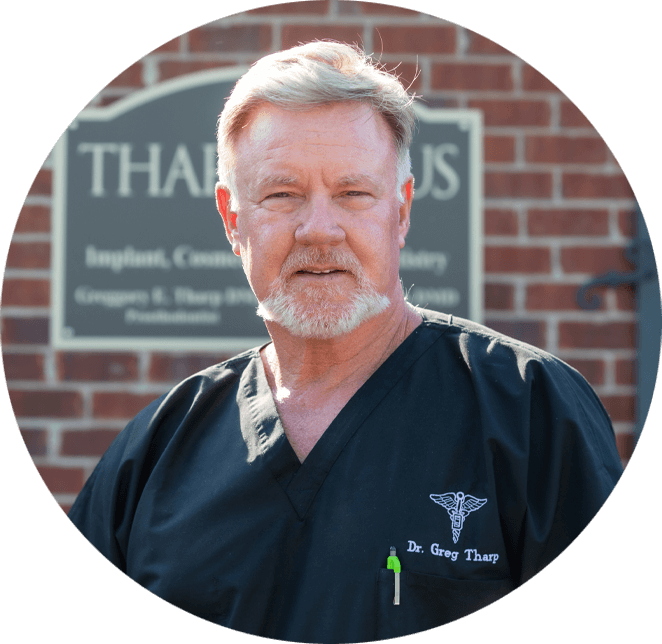
Dr. Greggory Tharp
Dr. Tharp has attained the unique achievement of being double board-certified with the American Board of Prosthodontics and with the American Board of Oral Implantology. He is also a Fellow in both the International Congress of Oral Implantologists and the American College of Prosthodontists. He applies this approach to every complex case that comes through our Flowood dental office. Patients who have been told elsewhere that their situation is too complicated, or who have had restorations that failed, frequently find that a prosthodontic evaluation changes the conversation.
What Does a Prosthodontist Treat?
Prosthodontic care covers a wide range of conditions and treatment types. Patients commonly seek prosthodontic evaluation for:
Missing Teeth: Whether one tooth or an entire arch, prosthodontists plan and coordinate implant-supported, fixed, and removable replacement options.
Worn or Damaged Teeth: Acid erosion, bruxism, and years of wear can shorten the teeth significantly, altering the bite and facial profile. Full mouth reconstruction through a prosthodontist restores proper dimension and function.
Failing Dental Work: Crowns, bridges, and older restorations that no longer fit or function correctly are evaluated and replaced with a comprehensive restorative dental plan rather than a piecemeal fix.
Full Arch Replacement: All-on-4, All-on-6, implant-supported dentures, and full arch fixed bridges are designed and overseen by the prosthodontist, who coordinates surgical and restorative phases of treatment.
Congenital or Developmental Conditions: Patients born with missing teeth, tongue-tie, or abnormal tooth development benefit from early prosthodontic planning.
Temporomandibular Concerns Related to Bite: Because prosthodontists study occlusion in depth, they are often involved in cases where bite problems contribute to jaw joint symptoms or chronic wear.
Prosthodontist vs. General Dentist: What's the Difference?
A general dentist provides comprehensive oral care:
Dental Exams
Teeth Cleanings
Fillings
Single Crowns
Routine Extractions
Most people see a general dentist for the majority of their dental needs throughout their life, and that’s entirely appropriate.
A prosthodontist steps in when the case involves greater complexity:
Multiple Missing Teeth
Full Arch Reconstruction
Significant Bone or Tissue Loss
Surgical/Restorative Care With Longer Treatment Timelines
In practices like Tharp, Klaus & Kelly, where the dentists have prosthodontic training, patients benefit from that level of planning without needing to travel to a separate specialty office.
The distinction matters most when a patient is considering a major investment in their smile. The design of that treatment–how the restorations are planned, how the bite is managed, what the long-term maintenance looks like–is where prosthodontic training makes a measurable difference in outcomes.
What to Expect at a Prosthodontic Consultation at Tharp, Klaus & Kelly
Your first appointment is a diagnostic evaluation, not a sales pitch. Dr. Tharp, Dr. Klaus, or Dr. Klaus will review your dental and medical history, examine your teeth, gums, and bite, and take any imaging needed to form an accurate picture of your current oral health. If you have existing dental work that’s failing or causing problems, that history is part of the evaluation.
From there, you’ll receive a clear explanation of your options, including what’s possible, what the process looks like, how long it takes, and what it costs. Patients from Pearl, Ridgeland, Brandon, and Flowood appreciate that the conversation stays concrete–no pressure, no urgency tactics, just an honest assessment of where you are and where you can go.
No. Patients can schedule a prosthodontic consultation directly without a referral from another dentist. If you have recent X-rays or records from a previous provider, bringing those to your first appointment can be helpful, but they’re not required to get started.
An oral surgeon focuses primarily on surgical procedures–extractions, implant placement, jaw surgery, and bone grafting. A prosthodontist focuses on the restorative side of tooth replacement: designing, placing, and maintaining crowns, bridges, dentures, and implant-supported prosthetics. In complex cases, the two specialties work together. At Tharp, Klaus & Kelly, surgical and restorative care are handled within the same practice.
Coverage varies widely by plan. Some insurance plans cover prosthodontic procedures partially, particularly for functional restorations like implants or dentures, while others classify them as cosmetic and exclude them. Our team will review your benefits before treatment and discuss financing options that make your care accessible.
Yes, and this is one of the most common reasons patients seek a prosthodontic evaluation. Restorations that repeatedly fail usually point to an underlying issue–with the bite, the bone, the design of the restoration, or the materials used. A prosthodontic evaluation looks at the full picture rather than replacing one failing piece with another.
One Team, One Location, Every Step
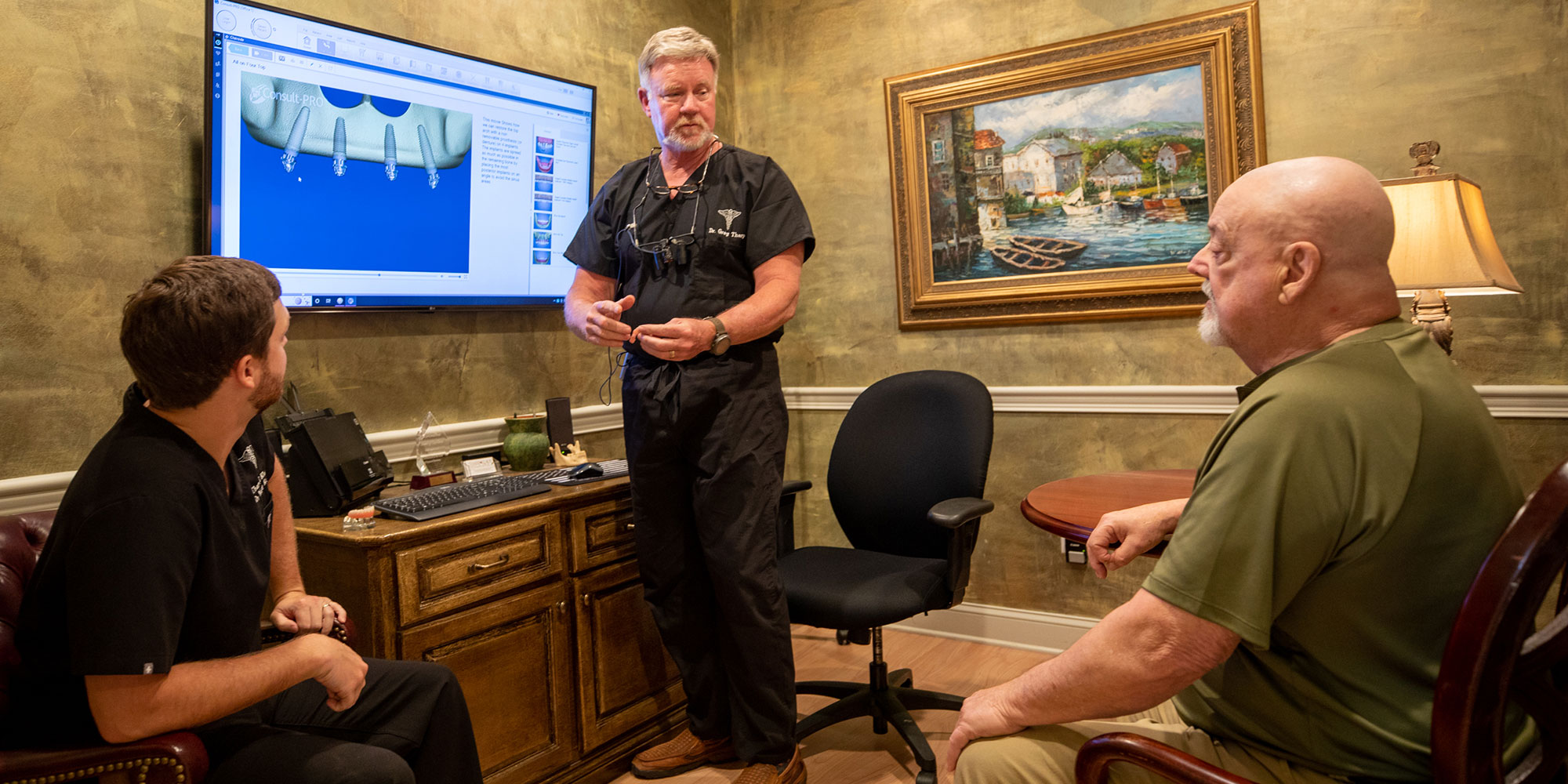
Prosthodontic cases often involve multiple phases: preliminary treatment, surgery, temporary restorations, and final placement. At Tharp, Klaus & Kelly, that entire sequence happens under one roof. The same dentists who evaluate you design your treatment, place your implants or oversee your surgery, and deliver your final restorations. There’s no referral chain, no record-transfer gaps, no starting over with someone new at each phase.
For patients in the Flowood and Jackson area who have been navigating tooth loss or failing dental work without a clear solution, that continuity makes a real difference. Call (601) 939-4100 to schedule your prosthodontic consultation in Flowood and find out what’s actually possible for your smile.
Affiliations
You Deserve the Best of the Best.
Call us today to schedule your consultation!
I understand the information disclosed in this form may be subject to re-disclosure and may no longer be protected by HIPAA privacy regulations and the HITECH Act.